The Language Problem Enterprise Design Programmes Solve
Large organisations adopt outcome-led design thinking because individual teams optimising for local objectives produce incoherent portfolios. The framework gives everyone, product, operations, strategy, technology, a shared vocabulary for what matters: user outcomes over feature lists, evidence over opinion, iteration over declaration.
The core rituals are well understood in mature programmes:
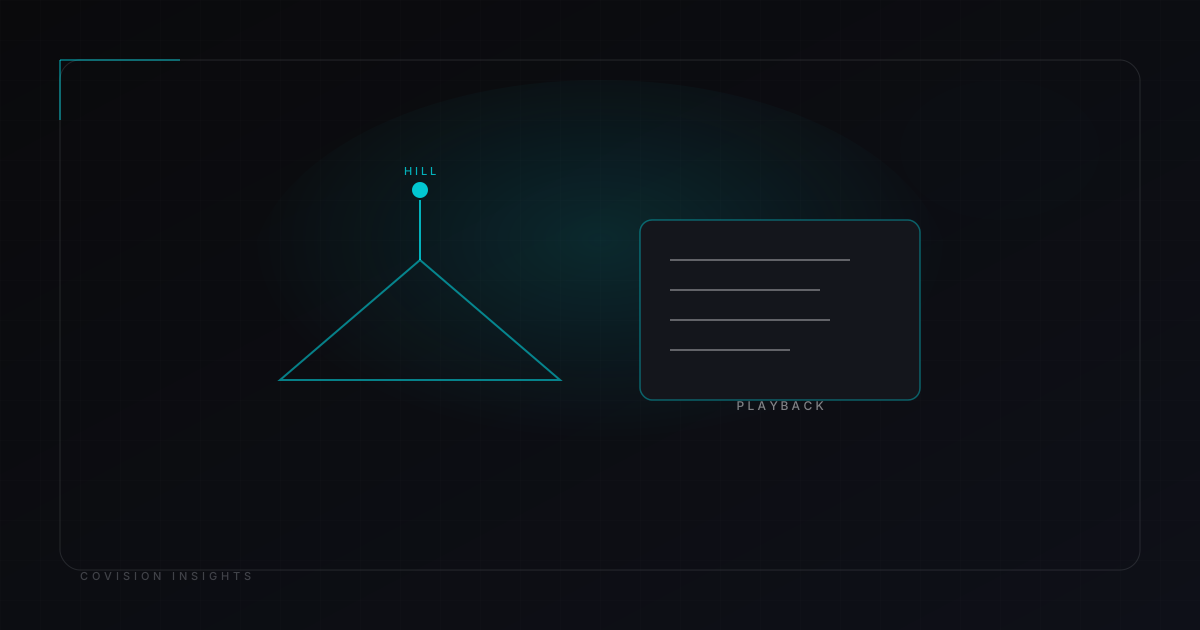
Hills, outcome statements that define what the team is trying to achieve for users, expressed as measurable intent rather than solution specifications.
Playbacks, structured review moments where stakeholders assess progress against those hills, surface assumptions, and decide what advances.
Sponsor-user engagement, real users kept in the loop throughout, so the programme stays anchored to lived experience rather than internal hypothesis.
These rituals work. They produce alignment faster than traditional project governance. Teams that run them consistently report shorter decision cycles, clearer prioritisation, and fewer initiatives that stall in committee.
What they do not reliably produce is timely, executive-ready output from the workshop itself.
Where the Framework Ends and the Synthesis Gap Begins
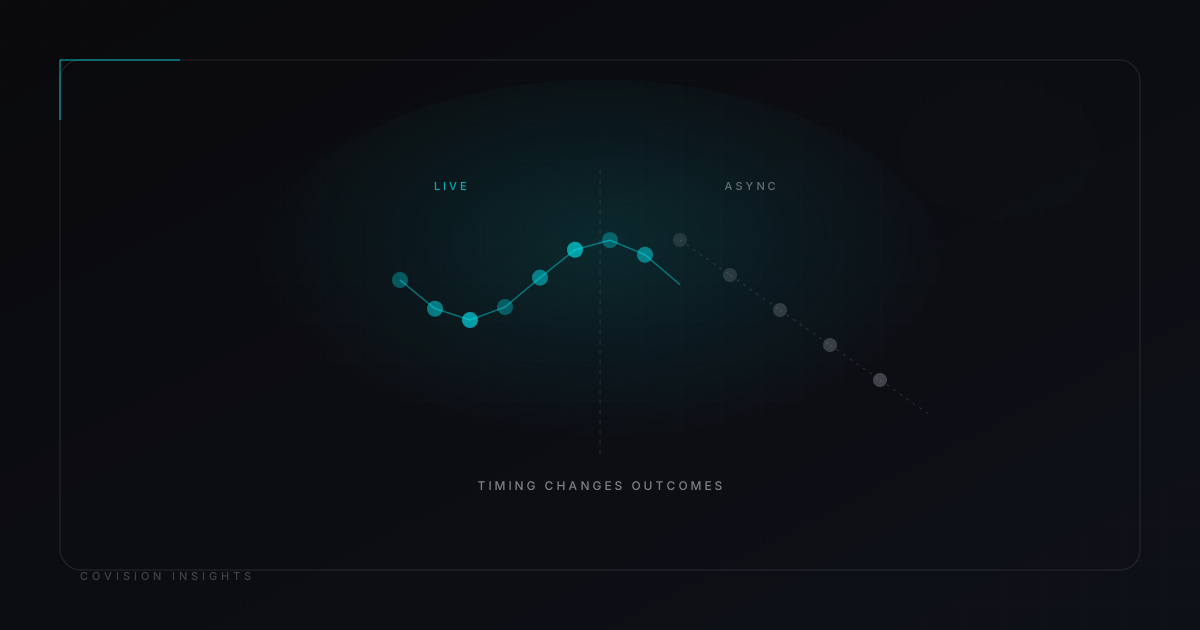
The synthesis gap is the period between a session closing and a structured output reaching the people who need to act on it. In outcome-led programmes, this gap is particularly costly because the framework's value depends on momentum.
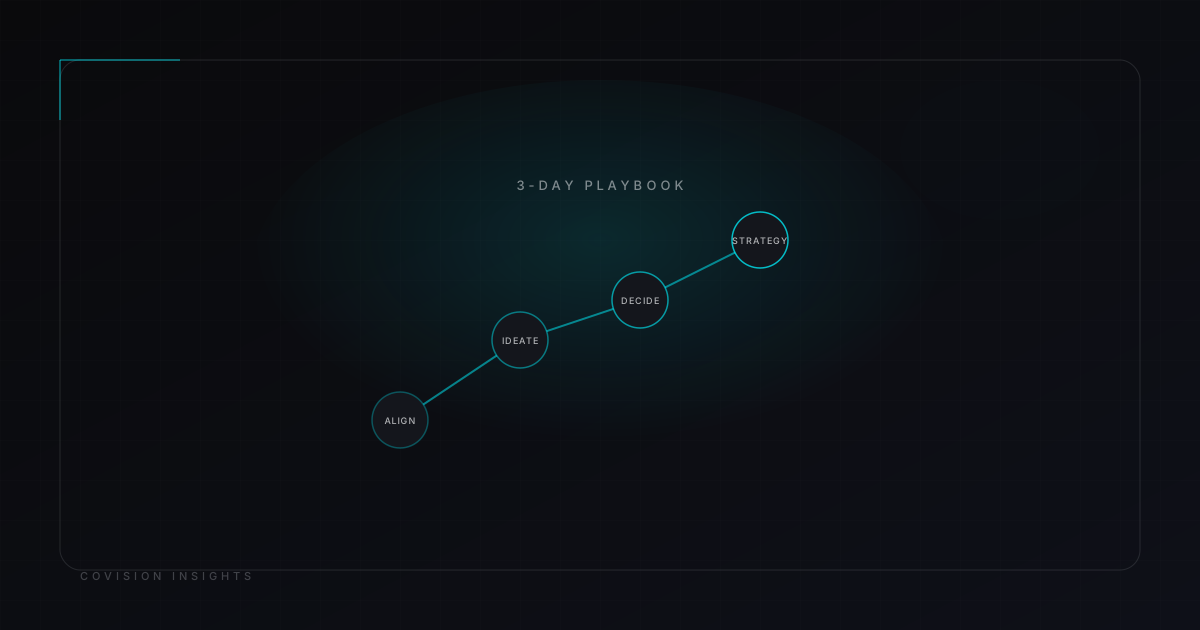
Consider a typical innovation offsite run under outcome-led design principles:
- Day one morning: the hill is defined and communicated
- Day one afternoon: teams ideate, sketch, and prototype concepts
- Day two morning: concepts are reviewed in a structured playback format
- Day two afternoon: priorities are agreed and next steps assigned
On paper, this is a complete cycle. In practice, the playback on day two often reviews raw workshop material, sticky notes, Miro boards, photographed sketches, that has not yet been structured into decision-ready documentation. The facilitator commits to producing the executive summary "within two weeks." By the time it arrives, the hill has shifted, sponsors have moved on, and the shared language the session built has started to decay.
This is not a failure of the design thinking framework. It is a failure of the output infrastructure that sits beneath it.
Mapping Programme Rituals to Operational Requirements
Each ritual in an outcome-led programme implies a specific output requirement. Most programmes meet the facilitation requirement but not the output one.
| Programme ritual | What the room needs | What usually happens |
|---|---|---|
| Hill definition | Clear challenge framing for every submission | Framing exists in slides; capture format is unstructured |
| Ideation | Consistent schema per idea | Sticky notes, photos, disparate formats |
| Playback | Decision-ready summary of what emerged | Raw material reviewed; synthesis deferred |
| Sponsor review | Traceable record of what was decided | Facilitator's post-hoc interpretation |
The gap between the second and third columns is where programme ROI evaporates. Teams that have invested in outcome-led design training, sponsor-user programmes, and playback cadences still lose value because the synthesis layer operates on a different timeline than the alignment layer.
Three Structural Fixes That Do Not Require More Facilitation
Most programmes attempt to close this gap by adding facilitator capacity, more consultants, longer synthesis windows, better Miro templates. These approaches treat synthesis as a labour problem. It is primarily a timing and schema problem.
1. Define the Output Schema Before the Hill Is Set
If every submission during the session is captured against the same structure, problem, proposed approach, expected outcome, key risks, the playback has material to review, not raw input to interpret. The hill defines intent; the schema defines evaluability.
Programmes that communicate the capture schema at session open, not just the hill, produce playback-ready material by default. The cognitive work of synthesis is distributed across participants rather than concentrated in the facilitator's post-session window.
2. Run Synthesis in Parallel with the Session
The playback should review structured outputs, not promise future documentation. That requires synthesis to happen while participants are still in the room, as each idea is submitted, not after the session closes.
Parallel synthesis changes the playback from a review of potential to a review of record. Stakeholders can challenge, correct, and prioritise against structured briefs while the people who generated the ideas are present to respond. This is qualitatively different from a playback that approves a direction and waits for a deck.
3. Treat the Export as the Playback Artefact
In mature programmes, the playback moment and the documentation moment are often separate events separated by days or weeks. Collapsing them, producing the executive summary, per-idea briefs, and prioritisation record before the session ends, means the playback is the documentation. There is no second meeting required to validate what was decided.
The export should contain four components: executive summary, evidence base, prioritised recommendation set, and named next steps. If the playback cannot produce all four before participants leave, the programme is running alignment without closure.
What CoVision Contributes, and What It Does Not
CoVision is not a replacement for outcome-led design thinking facilitation. It does not define hills, manage sponsor-user relationships, or teach playback rituals. Those remain the domain of programme leadership and facilitation expertise.
What CoVision provides is the output compression layer that outcome-led programmes typically lack:
- Blueprint challenge framing sets evaluation criteria before submissions open, operationalising the hill for capture purposes
- Real-time structuring converts each sketch and description into a venture-quality brief while the session is live
- Red-team critique surfaces assumptions and risks before the playback, not after
- Same-day export produces the playback document before the debrief, executive summary, per-submission briefs, and prioritisation record in one PDF
The combination means a programme can run its existing rituals, hill setting, sponsor engagement, structured playback, without the weeks-long synthesis lag that undermines them.
The Programme Design Implication
Organisations evaluating their innovation programme infrastructure should ask a single diagnostic question: Can we produce a playback-ready output before this session ends?
If the answer is no, the programme has an alignment layer without an output layer. No amount of design thinking training will close that gap, because the gap is not methodological, it is operational.
Programmes that answer yes, because they have structured capture, parallel synthesis, and same-day export, can run outcome-led design at the pace the framework promises. The shared language stays intact because the shared record keeps up with it.
Platforms like CoVision are built for this specific operational requirement: structured intake during the session, real-time synthesis as participants contribute, and boardroom-ready output available before the room empties. The framework gives you alignment. The infrastructure gives you closure.